
A long-term research program led by Dr Krista Nicholson is shedding new light on the lives—and vulnerabilities—of Indo-Pacific bottlenose dolphins (Tursiops aduncus) in the Peel–Harvey Estuary in Western Australia.
For over a decade, this shallow, microtidal estuary has been recognised as a live-stranding hotspot, with many dolphins bearing distinctive white scars from past stranding events. To understand why strandings occur and how important the estuary is to dolphins, boat-based surveys have been conducted since 2016 across the estuary and adjacent coastal waters. These surveys combine photo-identification, tissue sampling, and detailed behavioral observations.
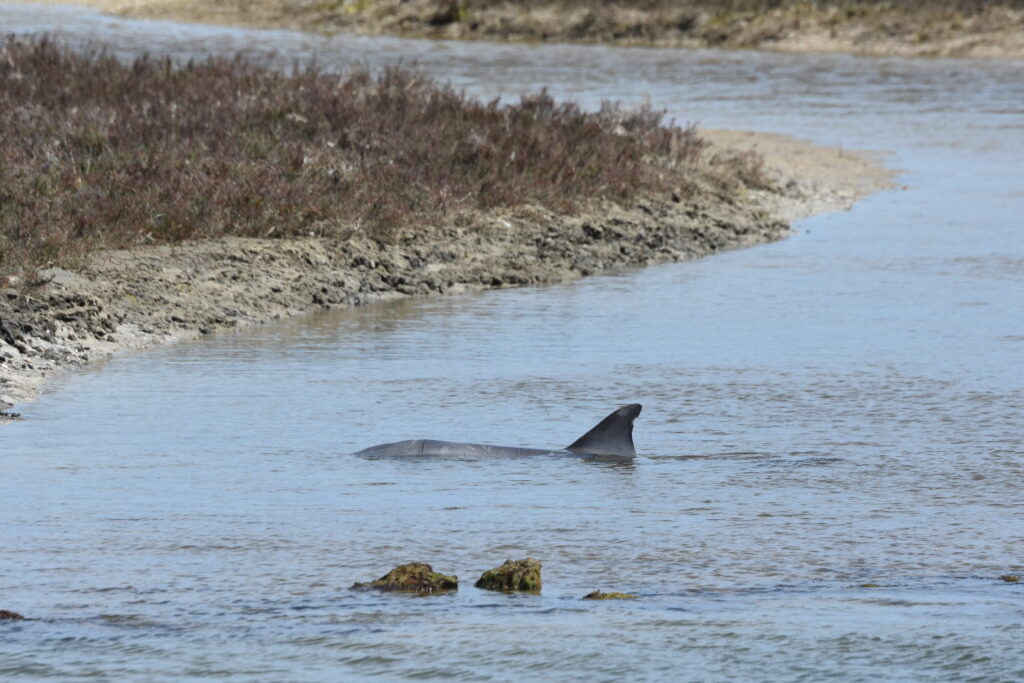
A dolphin confined stranded to a shallow pool behind sandbars in the Peel-Harvey Estuary in Western Australia.
The research has revealed that the estuary supports a distinct, resident social community of approximately 90 dolphins that rely on the system for foraging. In addition, four nearby coastal dolphin communities have been identified. While these groups are socially and spatially distinct, they are isotopically similar, suggesting shared ecological roles. Coastal dolphins periodically enter the estuary—particularly during seasonal fish migrations—creating opportunities for interaction and potential breeding.
A key strength of this work has been the integration of long-term research data with observations from community partners, including Estuary Guardians and Sea West (Mandurah Cruises). Together, these contributions have enabled near census-level monitoring of the population, allowing robust estimates of survival, reproduction, and population structure.
The estuarine dolphin community is considered stable, but has a slightly negative growth rate, which leaves it vulnerable to external pressures. Notably, no immigration into the estuary has been observed — individuals are born into this community. While calf and juvenile sex ratios are balanced, adult females outnumber males, likely reflecting patterns of permanent emigration and mortality over time. Encouragingly, reproductive output remains high, with females producing calves every two to four years.
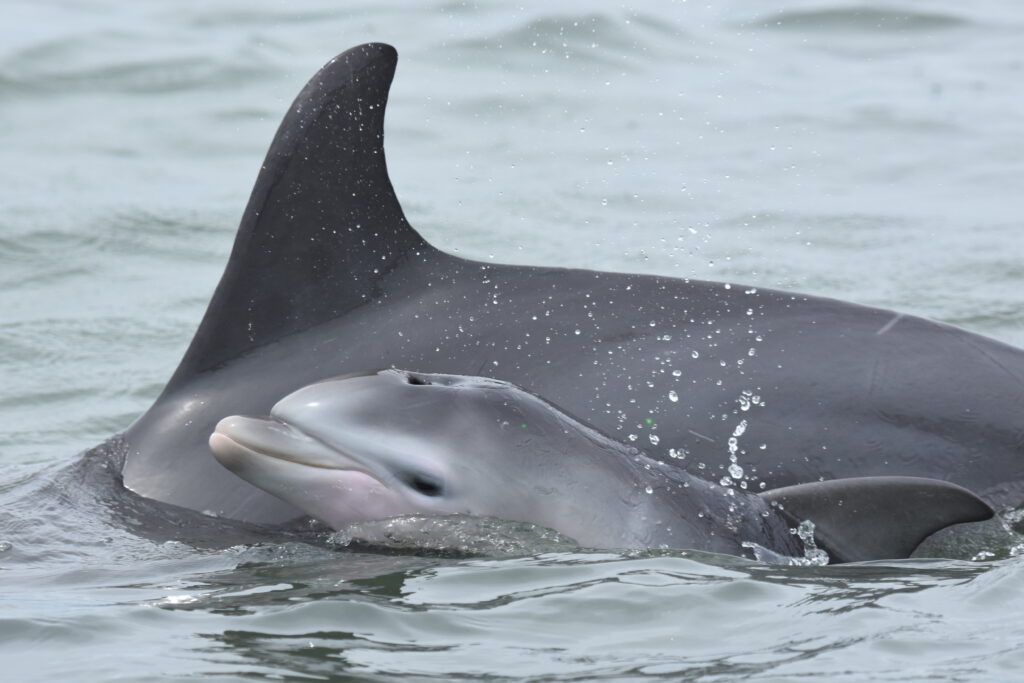
This body of work has contributed to the recognition of dolphins as a component of the Ecological Character of the Ramsar-listed Peel–Yalgorup wetland system.
Dr Nicholson’s current research is focused on understanding how dolphins use areas where strandings occur, and whether environmental conditions can help predict when strandings are most likely. Supported by Mandurah Cruises, this work aims to improve early detection and response, increasing the chances that stranded dolphins can be located quickly and guided back to deeper water.
Since 2016, 42 dolphins have stranded alive, with all but one belonging to the resident estuarine community. Stranded dolphins face serious risks, including sunburn and organ damage caused by the lack of water support, and many individuals have been lost as a result. The ongoing research provides for management action to be triggered if required and will help us better understand and mitigate the risks faced by the resident dolphin community.
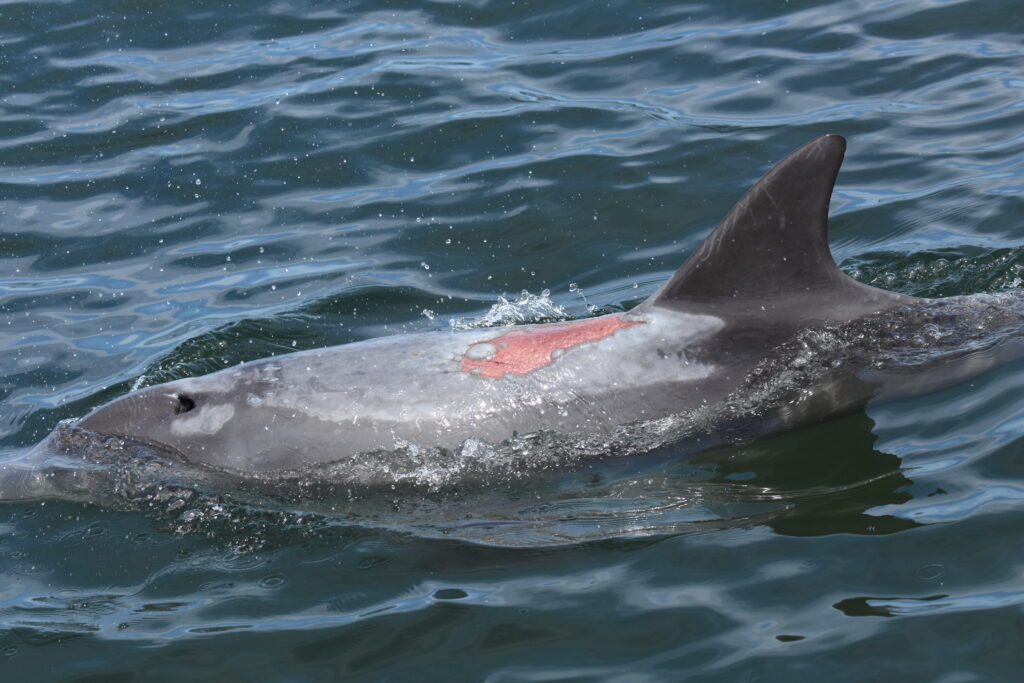
A dolphin healing from significant sunburn sustained while stranded in the shallows of the Peel-Harvey Estuary in Western Australia.
Dr Krista Nicholson’s research on the Peel-Harvey Estuary is funded by the City of Mandurah, the Peel Development Commission, Visit Mandurah and Sea West.