
Student opportunities
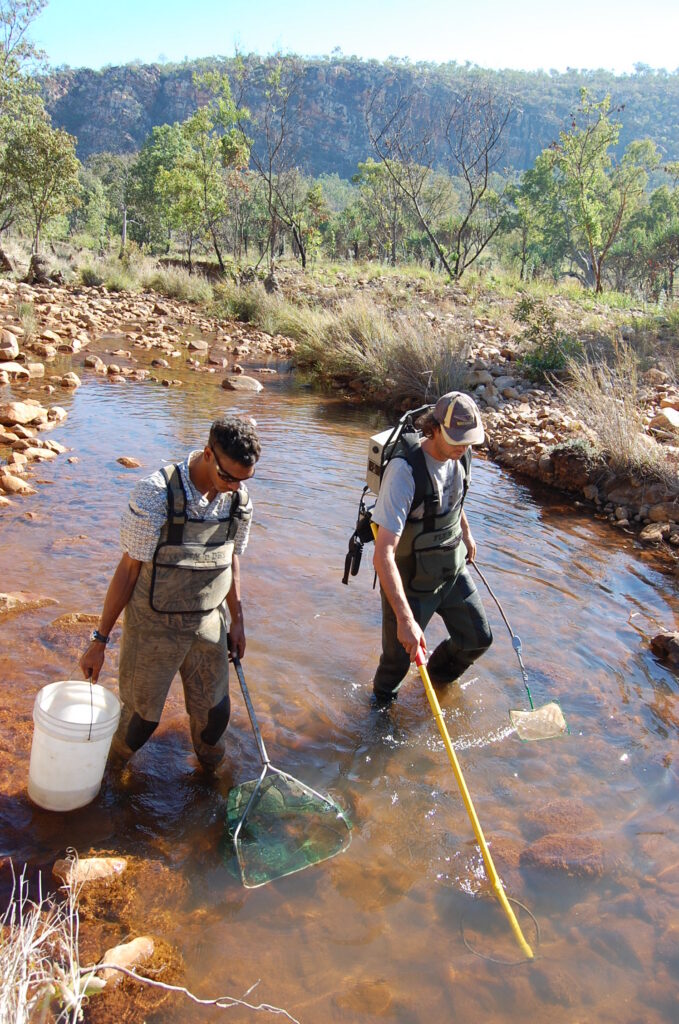
The Centre for Sustainable Aquatic Ecosystems has a vibrant student community. We offer opportunities for Honours, Masters and PhD students to study many different aspects of freshwater, estuarine and marine ecosystems.
Our expertise includes aquatic biology and ecology, marine mammal ecology, fisheries, aquaculture, algal biotechnology, oceanography, human-use and habitat assessments, bioinformatics, economics and spatial sciences. Our investigations span all levels of biological organisation from the genome to the ecosystem, and aquatic systems from inland lakes to beyond the continental shelf.
Send us an email to discuss your project idea or interests, and we can help you select a supervisor for Honours, Masters or PhD studies.
Currently available student projects
Below are listed the currently available Honours, Masters and PhD projects. Once you have contacted the project supervisor and they have agreed to supervise you chose, you can apply directly to Murdoch University through our online application system.
Honours
Understanding the path of seagrass seedling success for Amphibolis antarctica and Amphiboli griffithii
The viviparous Amphibolis plants develop seedlings on the adult plant. The grappling hook at the base of each seedling enables the seedlings to attach to seagrass, seaweeds, or even hessian, while many of the young plants wash up on beaches around Perth. In this project you will be tracking Amphibolis seedlings in the field from the point of release in the meadow to settlement, as well as study seedling movement characteristics in wave and flume tanks. Knowledge around the pathway, and forces needed to keep the seedlings suspended until they find a suitable receptor site will inform seagrass restoration strategies using seedlings in combination with other seagrass planting methods.
Supervisor(s): Professor Jennifer Verduin
Start date: Flexible
Comparative shark predation pressure on dolphin communities in metropolitan waters
Predation risk is a key ecological driver shaping the behavior, habitat use, and social structure of marine mammals. In coastal and estuarine metropolitan waters, shark–dolphin interactions represent an important but poorly quantified source of mortality risk. This project will investigate spatial and social variation in shark predation pressure across multiple dolphin communities using a 10-year longitudinal dataset.
Supervisor(s): Dr Krista Nicholson and Dr Delphine Chabanne
Start date: Flexible
Dolphin fishing line entanglements in Bunbury, Western Australia
This project investigates patterns and drivers of dolphin entanglements in coastal waters around Bunbury, Western Australia. It will utilize long-term photo-identification and monitoring datasets to quantify the prevalence of entanglement injuries (e.g., fishing line and gear), assess temporal trends, and identify demographic or behavioral risk factors within the local bottlenose dolphin population. The project aims to improve understanding of human–wildlife interactions in an urbanized coastal environment and provide evidence-based insights to inform mitigation strategies and management responses.
Supervisor(s): Dr Krista Nicholson and Dr Delphine Chabanne
Start date: Flexible
Skin lesions as predictors of survival and reproductive success in Indo-Pacific bottlenose dolphins
This project will investigate whether skin lesion prevalence can predict survival and reproductive success in resident Indo-Pacific bottlenose dolphins (Tursiops aduncus) of the Peel–Harvey Estuary. Using over a decade of photo-identification data, lesion prevalence, severity and persistence will be quantified for individually recognised dolphins and linked to apparent survival, calving rates, calf survival and reproductive success. The study will also examine how lesion occurrence varies with age, sex, habitat use and environmental conditions. By linking visible health indicators to demographic outcomes, the project will evaluate the utility of skin lesions as a non-invasive measure of dolphin health and population viability.
Supervisor(s): Dr Krista Nicholson
Start date: Flexible
Establishing baseline respiratory rates as indicators of dolphin health and welfare
Respiration is a fundamental physiological process that reflects metabolic demand, health status, and responses to environmental stressors. Despite its potential value as a non-invasive welfare indicator, baseline respiratory rates associated with different behavioural states remain poorly quantified in wild dolphin populations. This project will use focal behavioural observations of individually identified Indo-Pacific bottlenose dolphins to quantify respiratory rates during foraging, travelling, resting, and socialising. By establishing normal behavioural-specific respiratory patterns, the study will provide a critical baseline against which abnormal respiration can be identified, improving our ability to detect stress, compromised welfare, disease, injury, or declining health in free-ranging dolphins.
Supervisor(s): Dr Krista Nicholson
Start date: Flexible